The Perks of Pacing
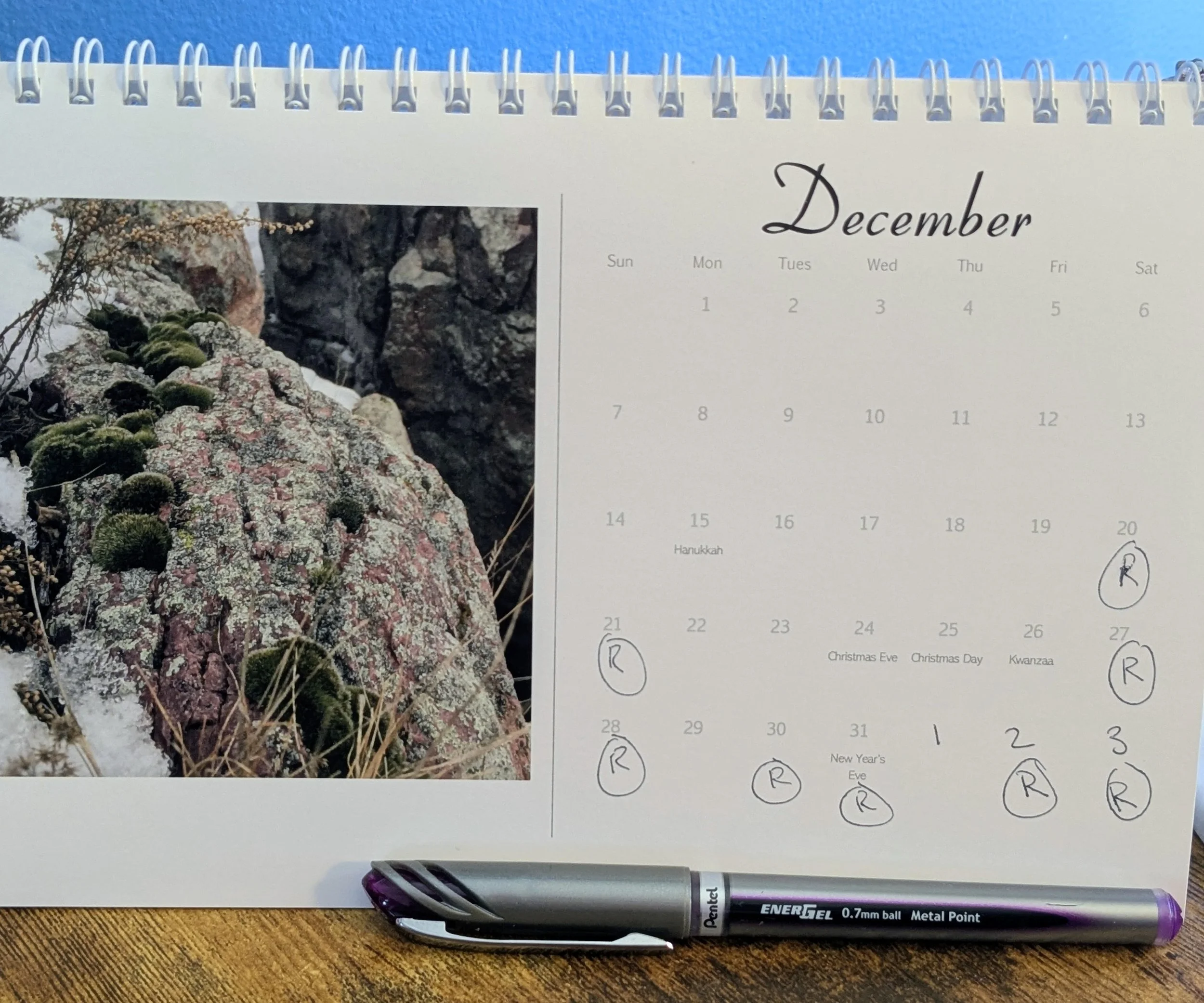
I’ve marked my manuscript revision days to help me pace myself and not feel overwhelmed.
If you’re like me, you probably have projects you’re trying to wrap up for the year and beginning to set intentions and goals for 2026.
How did things go for you this year? Do you have a big, audacious health, wellness, or creative goal you are itching to accomplish next year? I’ve been thinking about strategy when it comes to big projects, and I realized I’ve learned something along the way that is saving my sanity.
For background, at my core, I am a get-it-done-all-at-once kind of person. Usually at the last minute. If there’s a big health goal, event,l or creative project on the horizon, my instinct used to be to wait until the pressure is high, adrenaline is pumping, and then attempt a heroic sprint to the finish line. And yes, sometimes I could pull off a passable result that way.
But it came at a cost: stress, lost sleep, frayed nerves, and the acknowledgement that the outcome could have been richer, deeper, or more satisfying if I hadn’t rushed my way through it.
It took me a while to learn this lesson, but over time I’ve leaned into the power of pacing myself and discovered how it can lead to a more enjoyable journey and a better outcome.
The Half Marathon That Changed How I Think About Process
One of my earliest teachers in pacing came from half‑marathon training. Once I hit the confirmation button on the registration form, I recognized there was a huge gap between the 3 or so miles I was doing at a time, and the 13.1 I would need to be capable of on event day.
Fortunately, I had several coworkers who were long-distance runners. I asked for their advice. They talked about varying runs, gradually increasing mileage, and resisting the urge to do too much too fast.
The plan wasn’t glamorous. It was steady. Incremental. Often boring.
But something interesting happened: Each long run pushed me farther than I’d ever gone before. It was still hard. I was still sore the next day or two, but I also was proud in a way that felt earned rather than frantic. I began to appreciate the process itself, not just the finish line.
That experience rewired how I think about big goals.
Pacing Shows Up in Everyday Life, Too
I’ve noticed the same principle in ordinary situations.
When I’m preparing to host people for a meal, I now try to pace myself by prepping what I can ahead of time, doing a little cleaning each day, and being strategic about when I grocery shop. Compared to doing everything the day before, the experience is dramatically more enjoyable. I’m calmer and more present. I actually get to enjoy the gathering I worked so hard to create.
Eating the Elephant One Bite at a Time (a.k.a. Writing a Novel)
Writing my novel has been another masterclass in pacing.
Instead of waiting for vast, undefined stretches of time (although those can be lovely, too!), I designate a couple of focused hours per session and allow myself to fully immerse in the story. I make the experience inviting: a cozy blanket, a hot beverage, music that matches the mood. Sometimes I’ll go to a coffee shop or tuck myself into a quiet corner of the library, headphones on, world off.
Turning writing into a small, intentional ritual has made it not only more productive, but more enjoyable.
And now I’m deep in the revision process. I listened to the manuscript in an audio format (Nature Reader for the win!) and took notes for my first round of edits. At first I began bracing myself for an endless slog, but then I thought back to these lessons that I've learned and created a plan: about ten two‑hour sessions over the next few weeks to tackle specific issues. Some fixes will be quick and satisfying. Others may take the full block.
Is it still daunting? Absolutely.
Will I probably feel a little burned out after multiple rounds of revision? Very likely.
But because I’m pacing myself, I feel calmer, more grounded, and more confident that I’ll be proud of the final result — and that I’ll still have creative energy left when I’m done.
Pacing myself allows me to honor my nervous system, my energy, and the reality that meaningful work unfolds over time.
When I pace myself:
The journey becomes more sustainable
The work has room to deepen
I reduce burnout without sacrificing ambition
I’m far more likely to enjoy what I’m building
Your Turn
What kind of pacing strategy might help you enjoy the journey with a little more ease and feel genuinely happy with the outcome?
You don’t have to sprint to prove you’re committed. Sometimes the most powerful thing you can do is choose a pace you can live with and keep going.
If you’re feeling stuck or overwhelmed, let’s talk it through together. Schedule a complementary session with me using the button in the top right corner.
Happy holidays!